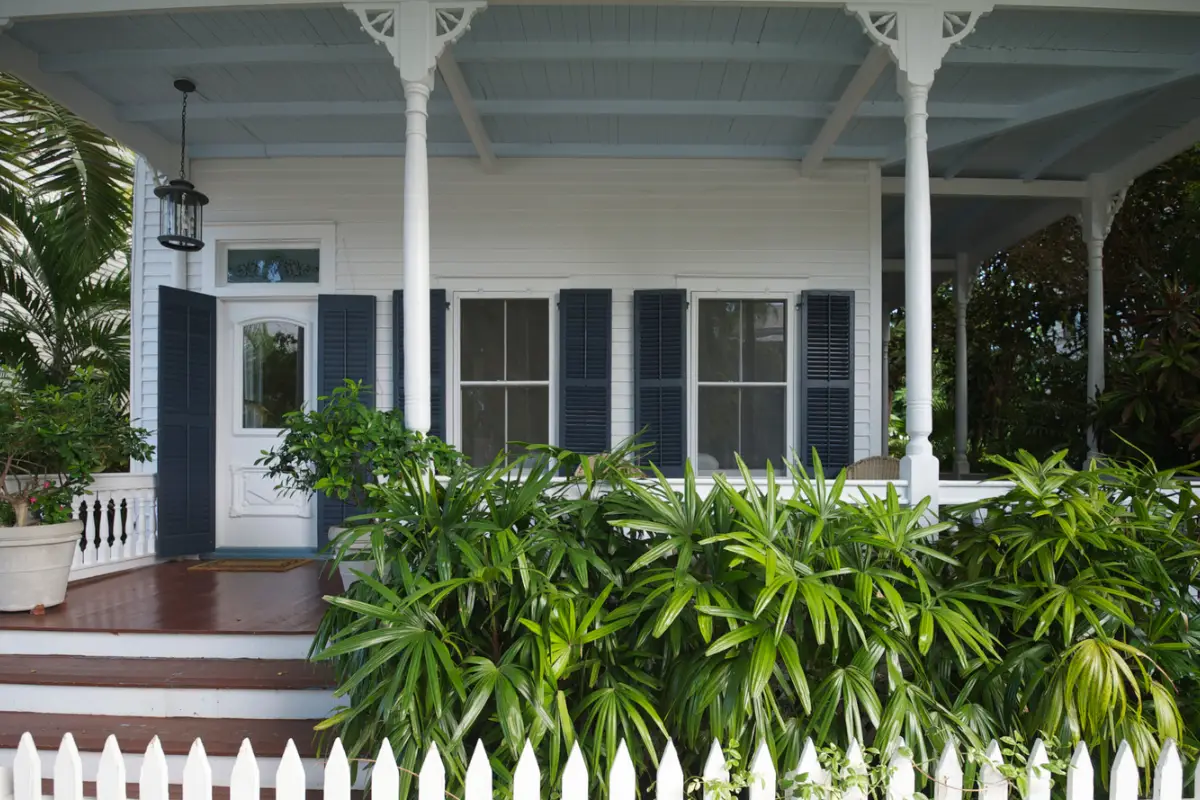
There’s much to admire about the Southern home’s front porch: the iconic combination of tall windows, sturdy shutters, and the rocking chairs or porch swings that all seem to achieve a welcoming, peaceful, “you’ve got all the time in the world” atmosphere. And as you sink into that rocking chair with an ice-cold glass of sweet tea in hand, you’ll probably notice that the porch’s ceiling is painted a pretty light blue. But did you know that this design choice—or tradition, rather—has a story that reaches far beyond its appearance?
The hue is bright—quintessentially coastal, even. And while the exact color may differ from porch to porch, the color is known as haint blue. The blue-green color is associated with a longstanding Southern belief that it would protect a home from unwanted spirits, or “haints.” This tradition is rooted in the Gullah Geechee culture of the coastal Southeast, and the practice offers a fascinating look into the folklore and cultural history that continue to shape the Lowcountry today.
What’s a Haint?
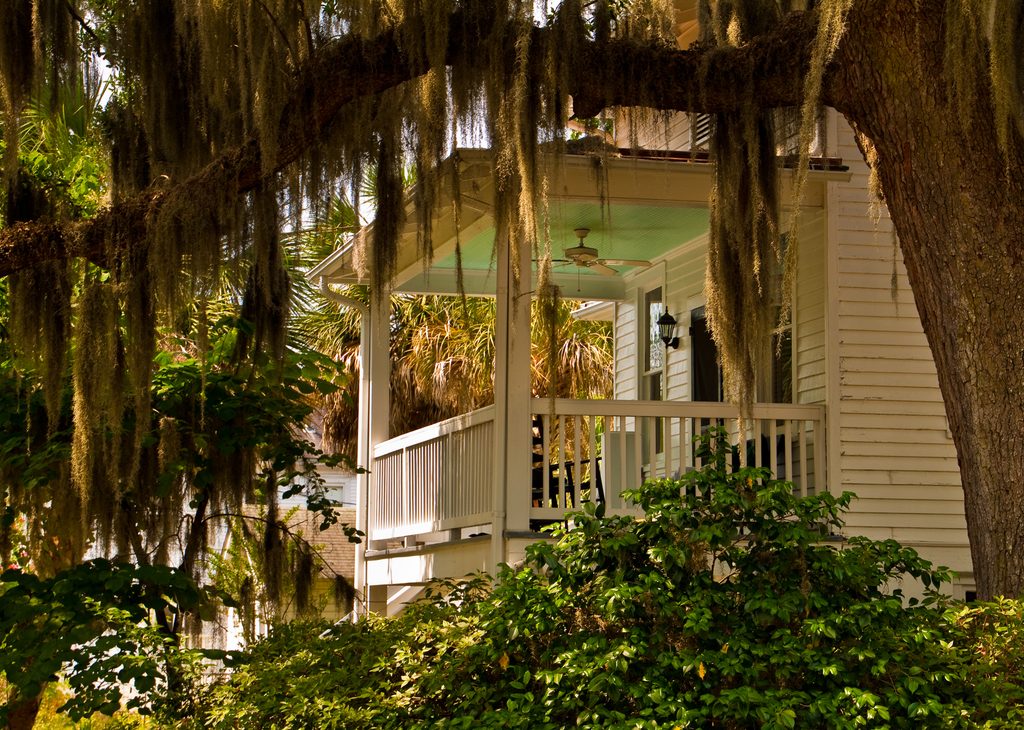
So what exactly are “haints,” and why do we need protection from them? Essentially, a haint is a “haunt,” or ghost, spirit, or whatever you can imagine goes bump in the night. Haints are believed to surround the living and cause harm to the household—hence the need for protection from them. According to the folklore passed down through generations within the Gullah Geechee communities along the coast of South Carolina and Georgia, if you believed that you had haints threatening your household, you painted a porch’s ceiling (or sometimes even trim pieces and other parts of the house) blue to discourage unwanted spirits from entering the home.
Why Blue?
Just as people avoid cracks in the sidewalk or never pick up a penny heads-down, some of us just accept a superstition at face value while others need to know why. In this case, the most popular and widely accepted explanation is that the color was thought to resemble water, which haints wouldn’t be able to cross. Others say it was meant to resemble the sky. Regardless, the painted blue ceiling was essentially a trick, with the household hoping that haints would mistake the ceiling for a body of water or open air and pass by without causing any trouble.
The color blue in general also has a connection to the Lowcountry’s agricultural history. During the colonial era, indigo was a tremendously important cash crop in South Carolina, with enslaved Africans carrying out much of the labor required to grow these plants that produced the vivid blue dye. Some accounts connect indigo to the early use of haint blue, but they aren’t definitively documented. So the color’s significance in the region has yet another layer of history shaped by both the Gullah Geechee traditions and the legacy of the indigo trade.

From Folklore to Design Choice
As a design choice made today, the haint blue color is driven more by aesthetics than by superstition. Although we will admit that a blue porch ceiling is a Southern tradition all the same, any other color would just seem flat-out wrong. There’s also a belief that the haint blue can help keep insects away, and whether that’s real or not, we know Southerners will go to lengths to keep mosquitoes and those pesky no-see-ums away!
So, the next time you find yourself relaxing on a Lowcountry porch, take a moment to look up. That light-blue ceiling might seem like a small detail, but it carries a story that connects the homes of today to the folklore, traditions, and history of the past. And in a region as rich in stories as the Lowcountry, even the ceiling above a rocking chair just might have a tale to tell!